Running an options trading business can be as simple as managing trades from a brokerage account. Options can fit almost any amount of capital and time, so start slowly and run it as a side project at first. You can do it online, on a flexible schedule, from anywhere. Here are five tips on running an options trading business.
Always Manage Risk in Options Trading
Managing risk is among the most essential skills of options trading. You must have a well-defined risk management plan to guard your capital and stop significant losses. This covers avoiding too much leverage, diversifying your trades, and using stop-loss orders.
Position sizing is another efficient risk management strategy. Your overall portfolio size and risk tolerance will help you decide the suitable capital amount to allocate to every trade, which keeps potential losses under control. Good risk management protects your capital and lets you trade confidently and with discipline.
Contact the best tradeline companies to improve your credit scores and increase your chances of success in the financial markets. With a solid risk management plan and improved credit scores, you can set yourself up for long-term economic stability and growth.
Use Timing in Options Trading
In options trading, timing is everything. Identifying good entry and exit points helps to optimize gains and reduce losses. Charts and indicators, among other technical analysis tools, can be quite helpful in deciding whether to start or stop a trade. Watching market patterns and keeping up with relevant news also helps you time your trades.
Mastering the timing of your trades depends on understanding implied volatility and how it affects option pricing. Implied volatility can significantly affect the value of options contracts since it indicates the market’s expectations for future price variations. Including implied volatility analysis into your trading plan can help you to make better decisions about the timing of your trades and improve your overall profitability.
Investing in the Long-Term and Short-Term
Options can expire in a few days or several months, and some, called LEAPS, run more than a year out. Which expirations are available depends on the underlying stock. Usually, risk increases with a shorter-term option, so beginners are often better off with longer-term options, such as monthly or longer expirations.
The longer the expiration date, the more time you will have to make your investment plan effective. The extended expiration period allows the option to keep its time value even if the stock turns out to be trading below the strike price.
Understanding the Risks
There is a risk component to all forms of trading. However, you can lower your risk by spending more time studying options trading and the many tactics you might use. While the option’s seller would theoretically have unlimited risk on a call because the price could rise indefinitely, the buyer of a put or call option would only have risk equal to the premium paid for the option.
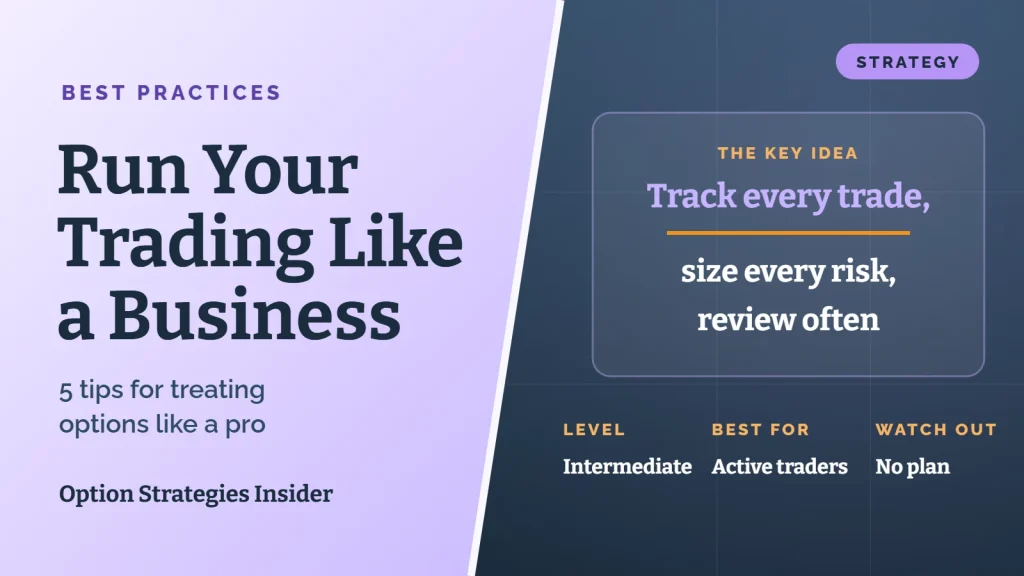
Track Your Trades Like a Business
A real business keeps books, and your trading should too. A simple trading journal turns guesswork into data you can learn from. For every trade, write down:
- Why you entered and what you expected to happen.
- Your entry price, exit price, position size and the result.
- What you did well and what you would do differently.
Once a month, review the numbers that matter: your win rate, your average win compared to your average loss, and how much of your account you risked per trade. These numbers tell you whether your strategy is working long before your account balance does. Our free options trading spreadsheet calculates all of them for you.
It also helps to keep a separate account for trading, so it’s easy to see your real results and to track gains and losses at tax time.
Plan for Taxes
Profits from options held a year or less are taxed as short-term gains, at your ordinary income rate, so set some money aside after a good month. Broad-based index options like SPX get different treatment under Section 1256: 60% of the gain is taxed at long-term rates and 40% at short-term rates, no matter how long you held the trade. A tax professional can help you plan for both.
Determine How Much to Invest in Options Trading
There isn’t a set amount you need to invest in options trading. The minimum depends on the options level you’re approved for and your broker’s rules. Many brokers let you buy calls and puts with no minimum, but spreads usually require a margin account, which needs at least $2,000 under FINRA rules, and some brokers ask for more.
You might be surprised to learn how simple it is to operate a successful options trading business from home with the correct broker. The keys to effective options trading are solid knowledge and a few proven strategies. If you’re a total novice, you should start with modest investments. You can invest more and earn even larger returns as you gain knowledge and make money.
Ready to run your trading like a business? Our free beginner options course gives you the playbook.