A long calendar spread with calls, also called a call calendar spread or time spread, uses two calls at the same strike with different expirations. You sell a near-term call and buy a longer-dated call. You profit if the stock stays close to the strike while the short call loses value faster than the one you own.
How the Long Call Calendar Spread Works
- Sell 1 call at strike A with a near-term expiration
- Buy 1 call at strike A with a later expiration
This is the standard long call calendar spread, with the same strike and different expirations. It’s opened for a debit, and that debit is the most you can lose.
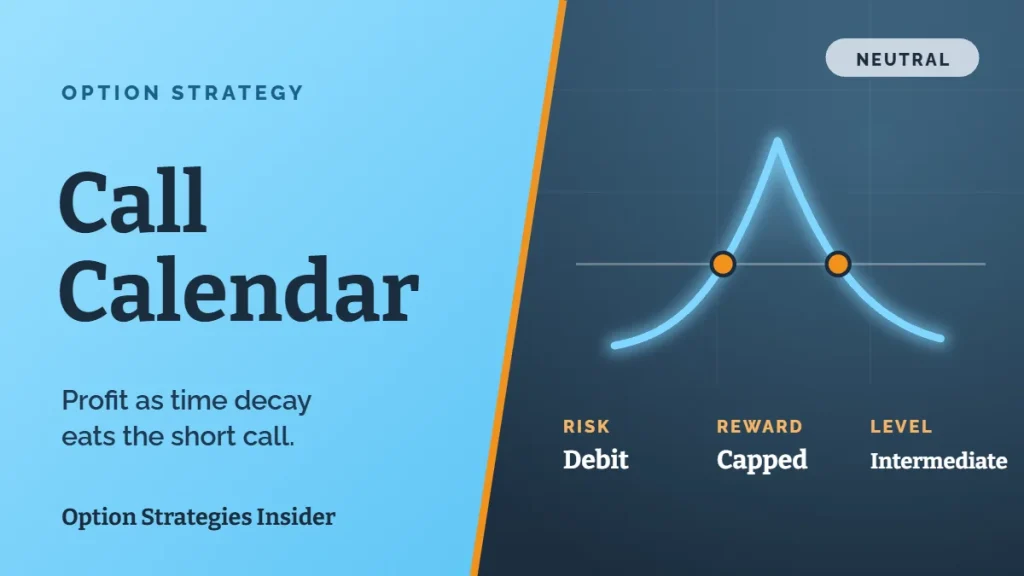
Call Calendar Spread Diagram
The diagram shows the payoff when the short call expires. It peaks at the strike and drops off if the stock moves too far away in either direction.
Max Profit, Max Loss and Breakeven
- Max loss: the debit paid.
- Max profit: happens if the stock is right at the strike when the short call expires, and depends on what the long call is worth then.
- Breakevens: one on each side of the strike, which depend on implied volatility and time left. Your broker’s risk graph will show them.
Call Calendar Spread Example
XYZ trades at $100. You sell the 100 call expiring in 30 days for $3.60 and buy the 100 call expiring in 90 days for $6.50. Your debit is $2.90, or $290. When the short call expires:
- XYZ at $100: the short call expires worthless. Your long call, with 60 days left, might be worth around $5.10, so you’re up roughly $2.20 a share, or $220.
- XYZ at $90 or $110: the spread loses much of its value, and you’ll likely lose part of the debit.
- XYZ makes a huge move: both calls end up worth about the same amount, and you can lose up to the full $290.
The long call values are estimates and depend on implied volatility.
When to Use a Call Calendar Spread
- You expect the stock to trade near a certain price over the next few weeks.
- Implied volatility is low and could rise, which helps the longer-dated call. Learn more about implied volatility.
- You want a low-cost, defined-risk neutral trade.
Call Calendar vs. Put Calendar and Diagonal
A put calendar spread at the same strike works almost the same way. A diagonal call spread uses different strikes to add a bullish tilt, and can be rolled month after month like a covered call.
Managing a Calendar Spread
- Close or roll before the short call expires, especially if it’s in the money, to avoid assignment.
- If the stock moves away from your strike, you can roll the short call or close the spread.
- After the short call expires worthless, you can sell another call against the long call.
Common Call Calendar Spread Mistakes
- Entering when volatility is high. A calendar spread is helped by rising volatility, so starting one when IV is already elevated works against you.
- Letting the stock run away. The trade does best with the stock near the strike when the short call expires. A big move either way can produce a loss.
- Ignoring earnings dates. An earnings report between the two expirations can move the stock and shift volatility in ways that hurt the spread.
Call Calendar Spread FAQ
Is a call calendar spread bullish?
At the money, it’s neutral. Placing the strike above the current price gives it a mild bullish lean.
Does implied volatility matter?
Yes. A rise in IV helps the longer-dated call more than the short one, so calendars benefit when IV climbs. A drop in IV hurts the trade.
Can I hold a calendar until the long call expires?
You can, but most traders close the whole spread around the time the short call expires, since that’s when the trade reaches its peak value.
What happens if the stock moves a lot?
Both calls lose most of their time value relative to each other, and the spread can shrink toward zero. Your loss is generally limited to the debit you paid.
What is the best environment for a call calendar spread?
Low implied volatility and a stock you expect to drift slowly or stay near the strike. A rise in volatility after you enter helps the trade.
Can I sell another call after the first one expires?
Yes. If the long call still has plenty of time left, you can sell a new short-dated call against it. Repeating this each month is one of the main ways traders get more income from a calendar spread.
Should I use weekly or monthly options for the short call?
Weekly options decay faster, so they bring in income sooner, but they need more attention. Monthly options are simpler to manage and usually have better liquidity.
Conclusion
The call calendar spread lets you profit from time decay and rising volatility with a small, defined risk. It works best when the stock stays close to your strike.
Related Option Strategies Articles
- Long Calendar Spread with Puts Option Strategy
- Diagonal Spread with Calls Option Strategy
- Understanding Options Greeks – The 4 Factors of Risk
- All 28 option strategies every trader should know
To learn how to build and manage calendar spreads, check out our free options trading course.