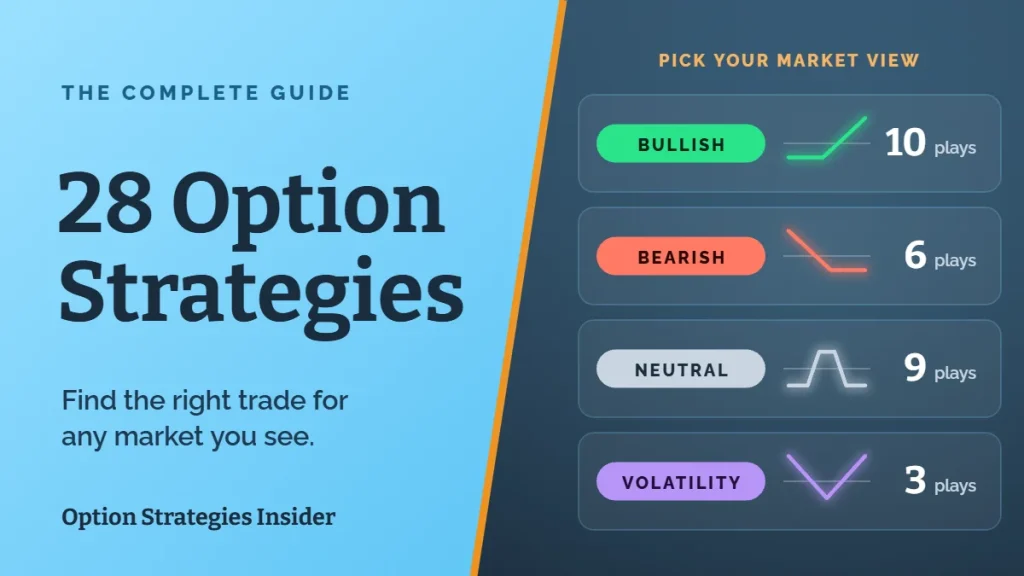
Option strategies are the different ways traders combine calls, puts and stock to match their view of the market. Whether you think a stock will rise, fall, sit still or make a big move, there’s an options strategy built for it, each with its own risk, reward and cost.
Below is our list of the 28 most popular options strategies, with how each one is set up, how you profit or lose, the breakeven points and the right time to use it. Click any strategy for the full guide:
-
 Long Call
-
 Long Put
-
 Short Call
-
 Short Put
-
Covered Call
-
Bull Call Spread
-
Bear Call Spread
-
Bull Put Spread
-
Bear Put Spread
-
Call Backspread
-
Long Straddle
-
Short Straddle
-
Long Strangle
-
Short Strangle
-
Iron Condor
-
Long Calendar Spread with Calls
-
Long Calendar Spread with Puts
-
Diagonal Spread with Calls
-
Diagonal Spread with Puts
-
Christmas Tree Spread with Calls
-
Christmas Tree Spread with Puts
-
Butterfly Spread Calls
-
Butterfly Spread Puts
-
Iron Butterfly
-
Collar
-
Protective Put
-
Synthetic Long Stock
-
Risk Reversal


The Strategies I Actually Trade
People ask me all the time which of these I really use. Honestly, it depends on the situation. But if I had to narrow it down, these are my top three.
Debit spreads when I have a view on direction. If technical analysis tells me which way a stock is likely to move, I like to trade a debit spread, a bull call spread if I’m bullish or a bear put spread if I’m bearish. You still make money on the move, but you pay a lot less than buying a call or put outright, so your risk is lower.
Calendar spreads for longer-term trades. With a calendar spread, depending on how far out the long option is, you can keep selling upside calls against your long call month after month. Each one you sell brings in more premium and lowers your cost.
Covered calls on stocks I own. The covered call is always a good strategy. If you own the stock and it isn’t going up, you can still generate income by selling calls against it. You get paid while you wait.
Everything else on this list has its place, but those three cover most of what I do week to week.
How to Choose the Right Options Trading Strategy
The best option strategy is the one that fits your outlook on the stock, how much risk you’re willing to take and how much time you expect the move to take. Start with one simple question: what do you think the stock will do? Then pick from the group below that matches.
Bullish Option Strategies
Use these when you expect a stock to rise:
1. Long Call
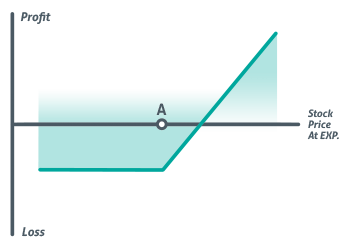
Buying a long call is the simplest way to bet on a stock going up. You pay a premium for the right to buy shares at the strike price, and that premium is the most you can lose. The catch is time: the move has to happen before expiration.
2. Bull Call Spread
A bull call spread is a debit spread: you buy a call and sell a higher strike call against it. The sold call lowers your cost and your breakeven, but it also caps your profit at the higher strike. It’s my go-to when I have a clear bullish view.
3. Bull Put Spread
A bull put spread is a credit spread: you sell a put and buy a lower strike put for protection. You keep the credit if the stock stays above your short strike, so it can win even if the stock just goes sideways. Max loss is the width of the strikes minus the credit.
4. Short Put
Selling a short put pays you a premium for agreeing to buy the stock at the strike price. If the stock stays above the strike, you keep the premium. If it drops below, you buy shares at a lower price than where they were when you sold the put, so only use it on stocks you’d be happy to own.
5. Call Backspread
A call backspread sells one call and buys two or more higher strike calls, often for a small credit. It loses the most if the stock rises just to the long strike, but profits grow fast on a big rally. It’s built for a sharp move higher, not a slow grind.
6. Christmas Tree Spread with Calls
A Christmas tree spread with calls uses calls at three different strikes to target a specific price above the market. It costs little to put on and pays the most if the stock finishes near the middle strike at expiration.
7. Diagonal Spread with Calls
A diagonal spread with calls buys a longer-term call and sells a shorter-term call at a higher strike. The short call decays faster and brings in income you can collect again each month, while the long call keeps you in the trade if the stock grinds higher.
8. Synthetic Long Stock
Synthetic long stock pairs a long call with a short put at the same strike. It moves almost dollar for dollar with the stock for little or no upfront cost. The risk is close to owning the shares outright, so it isn’t a beginner trade.
9. Risk Reversal
A risk reversal sells an out-of-the-money put to pay for an out-of-the-money call. You get upside past the call strike for little or no cost, but you’re on the hook to buy shares if the stock falls below the put strike.
Bearish Option Strategies
Use these when you expect a stock to fall:
10. Long Put
A long put is the simplest bearish trade. You profit if the stock drops below the strike by more than the premium you paid, and the premium is all you can lose. It also works as insurance on shares you own.
11. Bear Put Spread
A bear put spread is the bearish debit spread: buy a put and sell a lower strike put. It costs less than a put on its own and needs less of a drop to break even, in exchange for capping your profit at the lower strike.
12. Bear Call Spread
A bear call spread is a credit spread: sell a call and buy a higher strike call to cap your risk. You keep the credit if the stock stays below your short strike, so it can win if the stock falls or just stalls.
13. Short Call
Selling a naked short call collects premium if the stock stays below the strike. The risk is unlimited if the stock rallies, which is why most traders turn it into a bear call spread by buying a higher strike call.
14. Christmas Tree Spread with Puts
A Christmas tree spread with puts uses puts at three different strikes to target a specific price below the market. It’s low cost and pays the most if the stock falls to around the middle strike by expiration.
15. Diagonal Spread with Puts
A diagonal spread with puts buys a longer-term put and sells a shorter-term put at a lower strike. The short put decays faster and lowers your cost over time, while the long put profits if the stock works its way down.
Neutral Option Strategies
Use these when you expect a stock to stay in a range. Most of them profit from time decay:
16. Iron Condor
An iron condor sells a bull put spread below the stock and a bear call spread above it. You collect two credits and keep them if the stock stays between your short strikes. Risk is capped on both sides, which makes it one of the most popular neutral trades.
17. Iron Butterfly
An iron butterfly is an iron condor with both short strikes at the same price, right at the money. It collects a bigger credit, but the stock has to stay much closer to that price for you to keep most of it.
18. Butterfly Spread with Calls
A butterfly spread with calls buys one lower strike call, sells two middle strike calls and buys one higher strike call. It costs little and pays the most if the stock finishes right at the middle strike.
19. Butterfly Spread with Puts
A butterfly spread with puts works the same way with puts. The payoff is nearly identical, so traders pick calls or puts based on which costs less at the strikes they want.
20. Long Calendar Spread with Calls
A long calendar spread with calls sells a near-term call and buys a later-dated call at the same strike. The near-term option loses value faster, so you profit if the stock stays near the strike. You can keep selling new short-term calls against the long one month after month.
21. Long Calendar Spread with Puts
A long calendar spread with puts uses the same setup with puts. It works best when the stock sits near the strike and implied volatility holds steady or rises.
22. Short Strangle
A short strangle sells an out-of-the-money put and an out-of-the-money call. You collect premium from both sides and win if the stock stays between the strikes, but the risk is unlimited if it breaks out hard.
23. Short Straddle
A short straddle sells a put and a call at the same at-the-money strike. It collects the most premium of any neutral trade and carries the most risk. A move past either breakeven loses money fast.
Strategies for a Big Move in Either Direction
If you expect a big move but aren’t sure which way, these let you profit from volatility itself:
24. Long Straddle
A long straddle buys a call and a put at the same strike. You profit if the stock moves far enough in either direction to cover both premiums. It’s popular before earnings, but the drop in implied volatility after the news (IV crush) can hurt even when the stock moves.
25. Long Strangle
A long strangle buys an out-of-the-money call and an out-of-the-money put. It costs less than a straddle, but the stock has to move further before you make money.
Strategies to Protect Stock You Own
If you already own shares, these add income, protection or both:
26. Covered Call
A covered call sells a call against 100 shares you already own. You get paid while you wait, and in exchange you agree to sell your shares at the strike if the stock rallies past it. It’s one of the strategies I use most.
27. Protective Put
A protective put buys a put on stock you own, setting a floor under your losses. Think of it as insurance: you pay a premium, and you’re covered if the stock drops below the strike.
28. Collar
A collar combines a protective put with a covered call. The call premium helps pay for the put, so you can protect a position for little or no cost, in exchange for capping your upside at the call strike.
Options Strategies for Income
Income strategies sell options and get paid up front. If the trade works, the premium is yours to keep, and time decay works in your favor every day you hold it. The catch is that you’re being paid to take on risk, so how big the trade is matters more than how much premium you collect.
The most common income strategies:
- Covered calls: sell calls against stock you own. It’s the simplest income trade there is, and the one I use most on long-term holdings.
- Cash-secured puts: sell a put with the cash set aside to buy the shares. You get paid to wait for a lower entry on a stock you like.
- The wheel: not a separate strategy, but two from this list combined: the short put (#4) and the covered call (#26). Sell cash-secured puts until you’re assigned shares, then sell covered calls on those shares until they’re called away, and repeat.
- Credit spreads: a bull put spread or bear call spread works like selling a single option, but the option you buy caps your risk. Here’s more on how credit spreads work.
- Iron condors: two credit spreads at once, collecting premium from both sides while the stock stays in a range.
A few rules that make income trading work: sell premium when implied volatility is high, since that’s when options pay the most. Take profits early instead of squeezing out the last few cents. Many traders close at around 50% of the max profit. And keep each trade small enough that a full loss won’t wreck your account.
Option Strategies Chart: All 28 Compared
Here’s a quick look at all 28 options trading strategies side by side:
| Strategy | Market outlook | Max risk | Debit or credit |
|---|---|---|---|
| Long Call | Bullish | Premium paid | Debit |
| Long Put | Bearish | Premium paid | Debit |
| Short Call | Bearish to neutral | Unlimited | Credit |
| Short Put | Bullish to neutral | Strike minus premium | Credit |
| Covered Call | Neutral to mildly bullish | Stock cost minus premium | Credit |
| Bull Call Spread | Bullish | Debit paid | Debit |
| Bear Call Spread | Bearish to neutral | Spread width minus credit | Credit |
| Bull Put Spread | Bullish to neutral | Spread width minus credit | Credit |
| Bear Put Spread | Bearish | Debit paid | Debit |
| Call Backspread | Very bullish | Limited, at the long strike | Usually a credit |
| Long Straddle | Big move either way | Premium paid | Debit |
| Short Straddle | Neutral | Unlimited | Credit |
| Long Strangle | Big move either way | Premium paid | Debit |
| Short Strangle | Neutral | Unlimited | Credit |
| Iron Condor | Neutral | Spread width minus credit | Credit |
| Long Calendar Spread with Calls | Neutral | Debit paid | Debit |
| Long Calendar Spread with Puts | Neutral | Debit paid | Debit |
| Diagonal Spread with Calls | Mildly bullish | Debit paid | Debit |
| Diagonal Spread with Puts | Mildly bearish | Debit paid | Debit |
| Christmas Tree Spread with Calls | Moderately bullish | Debit paid | Debit |
| Christmas Tree Spread with Puts | Moderately bearish | Debit paid | Debit |
| Butterfly Spread with Calls | Neutral | Debit paid | Debit |
| Butterfly Spread with Puts | Neutral | Debit paid | Debit |
| Iron Butterfly | Neutral | Wing width minus credit | Credit |
| Collar | Protective, mildly bullish | Limited by the put | Low or zero cost |
| Protective Put | Bullish with protection | Limited by the put | Debit |
| Synthetic Long Stock | Bullish | Large, like owning stock | Near zero |
| Risk Reversal | Bullish | Large below the put strike | Near zero |
Basic vs. Advanced Strategies: Where Beginners Should Start
Basic options strategies use one or two options and are easy to understand: long calls, long puts, covered calls, protective puts and short puts. Advanced options strategies combine three or more legs, multiple strikes or multiple expirations, like iron condors, butterflies, calendars and Christmas trees. They let you fine-tune risk and reward, but they take more practice to manage.
If you’re new, start with defined-risk trades you fully understand. Covered calls are a great first step if you already own stock, and vertical spreads like the bull put spread and bear call spread are a natural next step because the risk is capped and the rules are simple. Save the strategies with unlimited risk, like naked short calls and short straddles, until you’ve got real experience.
Debit vs. Credit Strategies
A debit strategy costs money to open, and you need the stock to move your way to profit. A credit strategy pays you up front and profits if the options lose value, often just from time passing, which is why credit trades make up most of the income strategies above.
Options Trading Strategies FAQ
What are the safest option strategies?
Strategies with defined risk, like covered calls, protective puts, collars and vertical spreads, let you know your worst case before you enter. No options trade is risk-free, though.
How many options strategies are there?
There are dozens of variations, but the 28 strategies on this page cover nearly every market outlook you’ll run into.
Related Option Strategies Articles
- Buying Options vs. Selling Options – What to Consider
- Understanding Options Greeks – The 4 Factors of Risk
- How Credit Spreads Work
Get the number one rated options trading course and learn the best strategies to profit with options. Our free membership includes our award-winning options trading course, which consistently is rated the highest among members and critics for its ability to take a complicated topic like options and make it easy for anyone to understand. Click here to get your free membership now.