Many individuals do not say to themselves that they will trade the following day. It is a decision influenced by factors such as broker advertisement, good knowledge of economics, or an aggressive urge to go for what seems to be quick gains. To those eager to pivot into trading as a career path, there are some best practices to undertake.
Risk Management
Newbie traders have to make sure that the trading platform they use has strong risk management features. First, there is always the risk that when you are opening a trading position you may end up losing more than the deposited amount. This is due to the margin aspect of CFDs, which lets a trader use a small amount of money to control a much bigger value of the associated security.
CFDs offer an opportunity to control a certain amount of a traded asset for a price significantly lower than that asset’s price. However, this means that any profit or loss can be significantly higher than this figure at the beginning of the process.
You also have to be careful with large losses, which are always critical especially when there is a drastic change in price in a volatile environment. They could lead to a loss which is higher than the amount of money in the trading account. Some of the risks associated with trading should be addressed through the stock research tools a reliable trading platform offers.
Trading Goals
Not every platform offers the same features, so it’s important to pick one that is best suited for the targeted results you want to achieve. Like any other product, trading platforms are developed with certain users in mind.
Consider forex day trading as an example. If the focus is on engaging the forex market and opening many positions during the day, a platform that is tailored to this type of trading is ideal. It should have many currency pairs available and it must have relevant resources by which one can learn while trading.
Support and Education
When you have access to educational resources and support, you can choose the best trading market. Markets like forex and stocks provide various learning opportunities. These include online courses, webinars, and active trading communities.
By learning all these, you get a boost in confidence and understanding. Beginners should choose a market backed by strong educational tools and broker support. They should use resources like market analysis, trading signals, and reliable customer assistance. These make it easier to understand fundamental concepts and improve your chances of trading success.
Check for Value Traps
A value stock is identified by its low market price relative to the company’s core financial metrics. When evaluating these stocks, new investors have to concentrate on ratios such as:
Investors might also rely on how these values compare to similar companies in the industry. However, you might find that a stock appears undervalued. This is normally due to poor performance rather than genuine market potential. This scenario is known as a value trap. It occurs when a business is not genuinely undervalued. A business in this state struggles with financial instability and limited growth prospects. To avoid falling into this trap, assess qualitative aspects like:
- Management effectiveness
- Competitive positioning
- Potential opportunities for the company’s future improvement
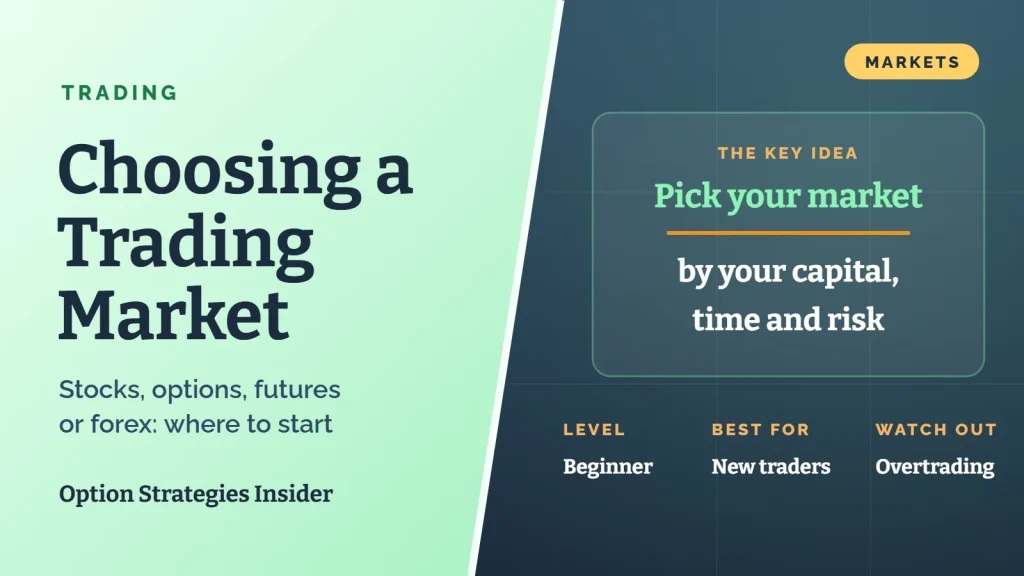
Stocks, Options, Futures or Forex: Which Market Fits You?
Each market has its own rhythm, costs and risks. Here’s a quick way to compare the four most popular choices before you commit your money and your time.
- Stocks: the easiest place to start. You can buy a single share, there’s no expiration date, and losses are limited to what you put in unless you use margin. Regular trading hours run 9:30 a.m. to 4 p.m. Eastern.
- Options: let you control 100 shares per contract for a fraction of the cost. You can profit when a stock goes up, down or sideways, and buying options caps your risk at the premium you pay. The trade-off is time decay, so you need a plan for every position. Our beginner’s options guide walks through the basics.
- Futures: contracts on indexes, oil, gold, grains and more that trade nearly around the clock. Leverage is high, so small moves create big gains or losses. They suit traders with more capital and experience.
- Forex: the largest market in the world, open 24 hours a day, five days a week. You trade currency pairs like EUR/USD, and brokers offer heavy leverage. See our forex trading basics for how pairs and pips work.
A simple rule: pick the market that matches your schedule, your account size and how much risk you can stomach. If you can only trade after work, forex or futures may fit. If you want time to think and limited risk, stocks and options are a better starting point.
Endnote
Every trader must identify their own niche. Traders should develop a trading strategy to achieve profitability. Tools like fu
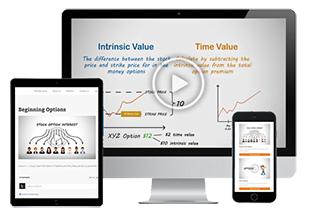
Whichever market you choose, options can help you trade it with less capital and defined risk. Our free beginner options course walks you through it step by step.